Purple Dawn in Pampore: Inside the Kashmir Saffron Harvest, and the Worry Behind It
Kashmir Saffron Harvest 2026: What Happens in Pampore’s Fields, and Why This Season Matters
Flowers are appearing on Pampore’s karewa plateaus and picking is expected to begin this week. This is how the harvest works, where Kashmiri saffron comes from, and what growers are worried about.
By: Kashmir Store | October 2026
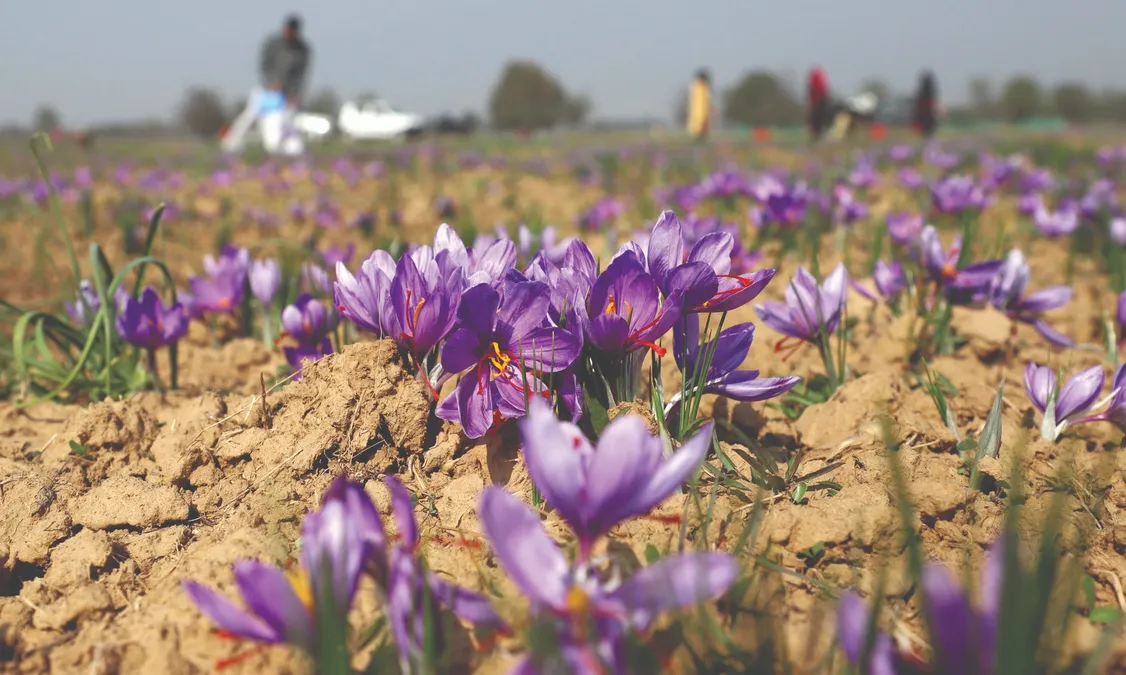
The Kashmir saffron harvest is starting in Pampore. Greater Kashmir reported on 23 October 2026 that saffron flowers have begun to emerge on the high-altitude karewa lands of Pulwama district, with harvesting expected to begin this week. The season is short, the work is done almost entirely by hand, and the outcome depends heavily on the weather over the next few weeks.
This article covers the harvest itself, the history and background of saffron in Kashmir, why production has fallen, and answers to common questions from visitors and buyers.
Looking for authentic Kashmiri products? Browse the collection
When does the Kashmir saffron harvest happen?
Saffron comes from the crocus flower, which blooms once a year. In Kashmir that happens in late autumn. Flowering usually starts in the second half of October and continues to roughly the first week of November, and some local guides extend the picking period into mid-November.
The dates change from year to year. Bloom timing shifts with rainfall, soil temperature and how early the cold arrives, so no fixed calendar date applies every year. In practice the visible bloom lasts about two to three weeks
What happens in the fields
Picking. Growers and their families go out early in the morning and pick the open flowers by hand into baskets. Flowers are picked soon after they open because they fade quickly once the day warms up. There is no mechanised method for harvesting saffron, which is why it is counted among the most labour-intensive crops in the world.
Separating the stigmas. Each flower has three red stigmas, the part that becomes saffron. The flowers are taken home, and family members pull the stigmas out by hand, often working together in a room or courtyard.
Drying. The raw stigmas have to be dried to reduce moisture before they can be sold. Because of this step, new-crop saffron does not reach shops immediately. Sellers say it starts arriving from late November into December.
The numbers. It takes up to 150,000 blooms to produce one kilogram of saffron, which is the main reason the spice is so expensive.
Explore Kashmiri saffron and gift options
Where Pampore is and why saffron grows here
Pampore is a town in Pulwama district, a short drive south of Srinagar on the national highway. Saffron is grown on the karewas, the raised plateaus around the town. Government estimates put close to 90% of Kashmir’s saffron cultivation in and around Pampore.
Pampore’s saffron has formal recognition. Kashmiri saffron received a Geographical Indication (GI) tag in 2020, applied for by the J&K Directorate of Agriculture with help from SKUAST-Kashmir and the saffron research station at Dussu. A GI tag legally ties a product’s name to its place of origin. The FAO also lists the Saffron Heritage of Kashmir among India’s Globally Important Agricultural Heritage Systems (GIAHS).
In Kashmiri, saffron is called kong posh. It is traditionally used in Kashmiri food, in kahwa and in festive dishes.
A short history of saffron in Kashmir
Nobody knows exactly when or how saffron reached the valley, and the origin stories differ.
- The Sufi legend. According to Kashmiri tradition, two travelling Sufi ascetics, Khwaja Masood Wali and Hazrat Sheikh Shariffudin, arrived in the 11th or 12th century. After a local chieftain helped them through an illness, they gave him a saffron bulb in return. A golden-domed shrine dedicated to the two saints stands in Pampore, and prayers are offered to them during the harvest.
- The Buddhist account. Another legend credits a Buddhist missionary named Madhyantika, said to have come to Kashmir in the 5th century BC.
- The Persian route. Some accounts say Persian rulers spread saffron across their empire to stock new gardens, and that this is how it reached Kashmir.
Historians have not settled the question. What is clear is that saffron has been grown in the valley for a very long time, and that it shaped local farming, trade and food.
Why this season is being watched closely
The harvest opens after a very poor year. Farmers say output fell by nearly 95 percent last season, which they attribute to adverse weather and the continued conversion of saffron land to other uses. National Geographic described it as one of the worst harvests on record. This year, recent rainfall has brought some relief after weeks of worry, though much depends on the weather in the coming weeks.
The longer trend is a shrinking crop. Official data show saffron area in Pampore falling from 5,707 hectares in 1996 to 3,500 hectares in 2021. Growers and experts name several causes:
- Irregular rain and dry spells. Changing weather patterns, including irregular rainfall and long dry periods, add uncertainty to the crop.
- Weak irrigation. The Rs 400-crore National Saffron Mission launched in 2010-11 has been criticised by farmers, who cite poor irrigation facilities. One grower said that after years of hearing about the mission, there are still no functional irrigation facilities on the ground.
- Land use change. Saffron fields are being converted to housing and other crops.
- Corm management. A SKUAST-K scientist pointed to the siphoning of corms and poor land management as problems that cut into the mission’s gains.
Buy Kashmiri products that support local producers
Visiting the saffron fields
Visitors come to Pampore for the bloom, and a few points help avoid problems:
- Timing. The best chance of seeing flowers is late October to early November. Check local reports before travelling, since the start date moves.
- Time of day. Go early in the morning, when the picking is under way.
- Respect the fields. These are family farms. Ask before entering, stay on the paths and do not pick flowers.
- Plan the trip. Our [Kashmir Travels guide to Pampore and the saffron season – insert link] covers routes from Srinagar, timing and nearby stops.
How to buy genuine Kashmiri saffron
Saffron is often adulterated or mislabelled, so a few checks help:
- Be cautious about very low prices, since real saffron is costly to produce.
- Look for a GI-tagged or certified product and ask where it was grown.
- Check the thread. Good saffron is mostly deep red, not mixed with yellow or white pieces. Avoid anything that looks damp or smells chemical.
- Remember that the fresh crop takes weeks to dry and reach the market.
Order authentic Kashmiri saffron and gift hampers online
Frequently asked questions
When is the saffron harvest in Kashmir?
Late October to early November, sometimes into mid-November. The 2026 harvest was expected to begin in the week of 23 October.
How long does the harvest last?
The visible bloom lasts about two to three weeks. Picking, separating and drying continue after that.
Where is saffron grown in Kashmir?
Mostly in Pampore, Pulwama district, with smaller areas nearby. Pampore accounts for around 90% of the valley’s saffron land by government estimates.
Why is Kashmiri saffron so expensive?
It is picked and processed entirely by hand, the flowering window is short, and it takes up to 150,000 flowers to make a kilogram.
Can visitors pick saffron flowers?
Only if a grower invites you. Most fields are private family property, so always ask first.
What is the GI tag on Kashmiri saffron?
It is a legal certification, granted in 2020, that ties the name “Kashmir saffron” to saffron grown in the region. It helps protect buyers and growers against fakes.
Why has production fallen?
Growers cite erratic weather, poor irrigation, land conversion and crop management issues. Farmers say last season’s output fell by about 95%.
When does new-crop saffron reach the market?
Usually from late November into December, after drying.
Is Pampore easy to reach from Srinagar?
Yes. It is a short drive south on the national highway, and many visitors make it a half-day trip.
Where can I buy Kashmiri saffron online?
You can browse Kashmiri saffron and other regional products
Planning a visit? Go early, ask before entering a field, and treat it as the working farm it is. Our Kashmir Travels guide to the saffron season has routes and timing tips.
One thing to remember: genuine Kashmiri saffron is rare for a reason. Behind every thread is a family, a courtyard and a very short season.