The Red Gold of Kashmir: Discover Authentic Mongra and Lacha Saffron
Pure Kashmiri Saffron: Discover the Golden Heritage of Kashmir’s Most Precious Spice
By: Kashmir Store | October 2026
From the celebrated saffron fields of Pampore to kitchens around the world, Kashmiri saffron represents centuries of agricultural tradition, delicate craftsmanship and extraordinary natural fragrance. Discover the difference between Mongra and Lacha, what makes genuine Kashmir saffron special, and how to bring its unmistakable character into your home.
There are ingredients that transform a dish. And then there are ingredients that transform an entire experience.
A few strands of saffron can turn ordinary milk into an aromatic delicacy, give biryani its distinctive golden appearance, enrich traditional desserts and add an unmistakable fragrance to festive preparations.
Known as Kesar, saffron has occupied a special place in Indian culinary traditions for generations. Among the varieties appreciated by spice lovers, Kashmiri saffron holds a particularly distinguished position.
Its deep crimson strands, characteristic aroma and concentrated colouring properties have made it one of the most recognised agricultural products associated with Kashmir.
But genuine Kashmiri saffron is more than an expensive spice. It is the result of a delicate agricultural process involving carefully cultivated flowers, manual harvesting, precise separation of stigmas and controlled drying.
At Kashmir Store, the story of saffron begins with an appreciation of that heritage.
For customers looking to buy authentic Kashmiri saffron online, understanding its origin, grades and quality characteristics is the first step towards making a confident purchase.
Pampore: Where Kashmir’s Saffron Story Begins
When people speak about Kashmir saffron, one destination immediately comes to mind: Pampore.
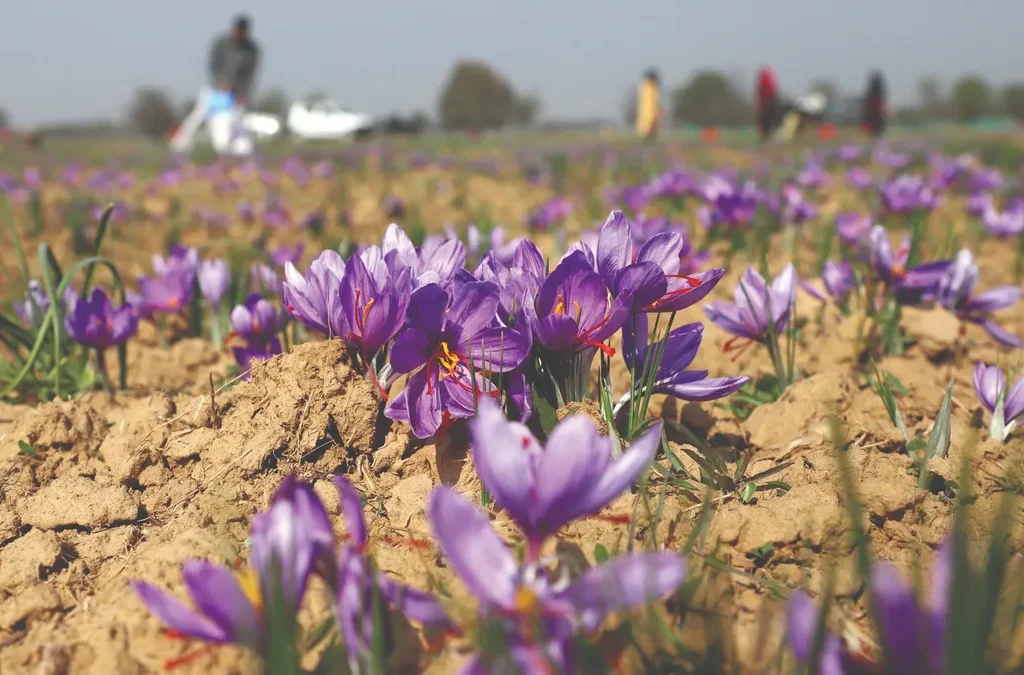
Located in the Pulwama district of Jammu and Kashmir, Pampore is widely recognised as the Valley’s traditional saffron-growing centre. Its elevated Karewa landscapes, distinctive soil conditions and local agricultural practices have supported saffron cultivation for generations.
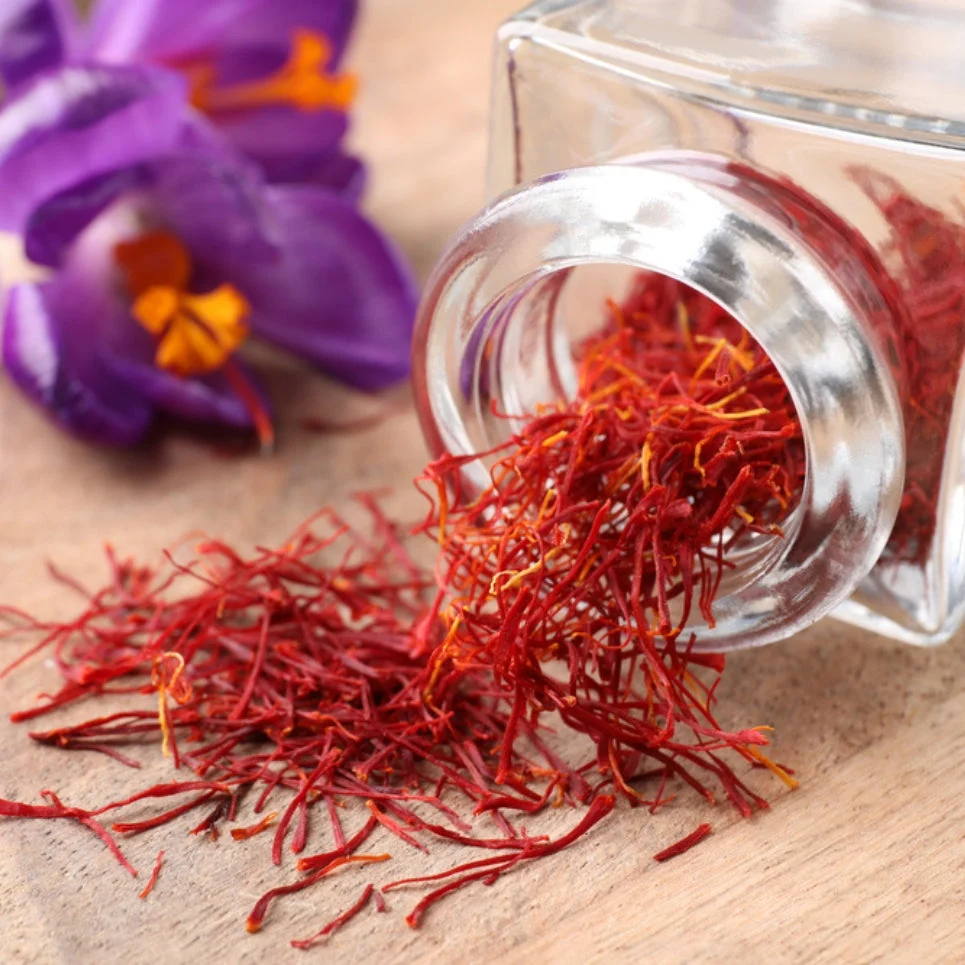
The saffron plant, scientifically known as Crocus sativus, produces beautiful violet flowers. Inside each flower are three red stigmas, which are carefully separated, dried and processed to produce the spice.
Unlike many agricultural crops harvested in large quantities through mechanised processes, saffron production involves considerable manual work.
The flowers must be collected during their short flowering season. The delicate stigmas are then separated from the flowers and dried carefully to preserve their colour, aroma and characteristic flavour.
It takes an enormous number of flowers to produce even a small quantity of finished saffron.
This labour-intensive process is one reason genuine saffron commands a premium price.
The Kashmir Saffron GI Recognition
Kashmir Saffron has been registered under India’s Geographical Indications system.
The official GI Registry records Kashmir Saffron under Application No. 635, with registration granted on 1 May 2020. The registered geographical area is Jammu and Kashmir.
GI recognition helps protect the identity and reputation of a regional product whose qualities are associated with its geographical origin.
However, consumers should understand that a GI registration for a product does not automatically certify every packet sold under its name. Seller credentials, product traceability, packaging and appropriate quality documentation remain important.
Why Kashmiri Saffron Is So Highly Valued
The reputation of Kashmiri saffron is connected to three important natural compounds.
1. Crocin: The Colour Behind the Golden Appearance
Crocin is responsible for saffron’s characteristic colouring properties.
When saffron strands are soaked in warm water or milk, they gradually release a rich yellow-golden colour.
The intensity of this colour is one of the important characteristics considered when evaluating saffron quality.
2. Safranal: The Signature Aroma
Safranal contributes significantly to saffron’s distinctive fragrance.
It is responsible for much of the warm, slightly floral aroma that makes saffron instantly recognisable.
3. Picrocrocin: The Characteristic Taste
Picrocrocin contributes to saffron’s characteristic bitter taste and is an important quality-related compound.
Together, these compounds help determine the colour, aroma and flavour profile of saffron.
Their levels can vary depending on origin, growing conditions, harvesting, processing, drying and storage.
This is why visual appearance alone is not enough to establish the quality of a saffron batch.
Explore authentic Kashmiri food products and traditional specialities at Kashmir Store.
Mongra and Lacha: Understanding the Two Traditional Kashmiri Saffron Varieties
Not all saffron strands look the same.
In Kashmir, two familiar traditional categories are Mongra and Lacha. Their differences are primarily related to how the saffron stigma is separated and processed.
Understanding these categories helps customers choose according to their preferences, culinary requirements and budget.
Premium Kashmiri Mongra Saffron
Mongra is traditionally considered the more premium Kashmiri presentation.
It consists primarily of the deep-red stigma portion, with the pale yellow style removed during processing.
The result is a collection of rich red strands with a distinctive appearance.
What makes Mongra special?
- Deep crimson-red appearance.
- Predominantly red stigma material.
- Strong characteristic saffron aroma.
- Excellent colouring properties.
- Premium positioning in the traditional Kashmiri saffron market.
- Suitable for biryani, pulao, desserts, kesar milk and festive preparations.
Mongra is particularly popular among customers who prefer saffron strands with minimal yellow portions.
Its higher price is generally associated with the additional processing and selection involved in separating the red portions.
For premium culinary applications and special occasions, Mongra remains a popular choice.
Authentic Kashmiri Lacha Saffron
Lacha, also written as Lachha or Laccha, retains more of the natural saffron strand, including a portion of the yellow style attached to the red stigma.
It is a traditional form of saffron and should not automatically be considered adulterated or inferior in authenticity.
Its appearance is different from Mongra, but it remains genuine saffron when properly sourced and processed.
What makes Lacha a good choice?
- Traditional whole-strand presentation.
- Red stigma with a portion of the yellow style attached.
- Characteristic saffron fragrance and flavour.
- Suitable for everyday cooking and traditional recipes.
- Useful for milk, desserts, rice preparations and beverages.
- Often available at a different price point from Mongra.
The choice between Mongra and Lacha depends on the intended use, personal preference and verified quality of the product.
Importantly, the grade name alone cannot establish laboratory quality.
Mongra vs Lacha: Which Should You Buy?
| Feature | Mongra | Lacha |
|---|---|---|
| Appearance | Predominantly deep-red strands | Red strands with some yellow style |
| Processing | Yellow style is removed | More of the natural strand is retained |
| Market positioning | Premium category | Traditional alternative |
| Colouring | Depends on tested batch quality | Depends on tested batch quality |
| Culinary use | Premium dishes and desserts | Everyday and traditional cooking |
| Price | Generally higher | Often comparatively economical |
Our suggestion: Choose Mongra if you prefer predominantly red strands and a premium presentation. Choose Lacha if you appreciate the traditional whole-strand appearance and want another authentic form of Kashmiri saffron.
For either variety, insist on reliable sourcing and appropriate quality information.
How to Identify Genuine Kashmiri Saffron
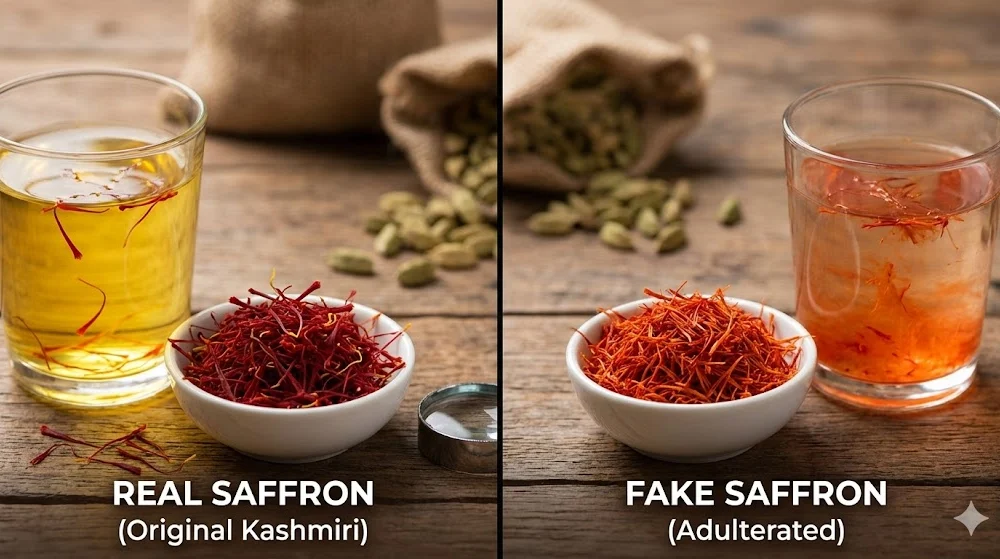
Saffron is one of the world’s most expensive spices, which makes it vulnerable to adulteration and misleading product descriptions.
Artificially coloured plant fibres, dyed materials and other substitutes have historically been used to imitate saffron.
A little awareness can help customers avoid questionable products.
Look at the Strands
Genuine saffron consists of delicate flower stigmas.
The strands usually have a characteristic trumpet-like shape at one end. Mongra generally contains predominantly red stigma portions, while Lacha retains more of the yellow style.
Check the Aroma
Authentic saffron has a distinctive fragrance. It should not smell like ordinary perfume or artificial fragrance.
Observe the Colour Release
When genuine saffron is placed in water, it releases colour gradually rather than behaving like an ordinary artificial dye.
However, this is only a preliminary observation, not a conclusive purity test.
Check the Packaging
Look for:
- Clear product identification.
- Mongra or Lacha grade information.
- Net weight.
- Manufacturer, packer or seller details.
- Batch or lot number.
- Packing and best-before information.
- Applicable food-safety and certification details.
Ask About Testing
International Standard ISO 3632 provides methods and quality parameters for saffron, including colouring strength, aroma-related characteristics and other specifications.
A credible seller should be able to explain the available quality documentation rather than relying entirely on attractive packaging or promotional claims.
The Food Safety and Standards Authority of India also provides methods for identifying saffron in filament and powdered forms.
Bring home the flavours of Kashmir through Kashmir Store, your online destination for exploring Kashmiri food and heritage products.
How to Use Kashmiri Saffron in Everyday Cooking
One of saffron’s greatest strengths is its versatility.
A small quantity can contribute colour, fragrance and flavour to several types of dishes.
Kesar Milk
One of the simplest ways to enjoy saffron is by adding a few strands to warm milk.
Allow the strands to infuse before serving. You can add cardamom, almonds or a little sweetener according to your preference.
Biryani and Pulao
Saffron is a familiar ingredient in celebratory rice preparations.
Infused saffron liquid can be drizzled over rice to create attractive colour variations and a distinctive aroma.
Traditional Indian Desserts
Kheer, phirni, kulfi, rasmalai and several other desserts benefit from saffron’s fragrance and golden appearance.
Kahwa and Other Beverages
Saffron can be added to traditional Kahwa preparations alongside ingredients such as cardamom, cinnamon and almonds.
Festive Cooking
Whether preparing sweets for a celebration or a special family meal, saffron adds a sense of occasion.
How to Prepare Saffron for Maximum Flavour
Rather than adding dry strands directly to a large preparation, consider infusing them first.
- Take a small quantity of saffron strands.
- Place them in a little warm water or milk.
- Allow them to steep for approximately 10–20 minutes.
- Add the infusion to your preparation.
- Adjust the quantity according to the recipe and desired intensity.
Avoid boiling saffron for unnecessarily long periods, as excessive heat and poor handling can affect its delicate aromatic compounds.
Saffron and Wellness: Tradition Meets Modern Research
Saffron has been used in traditional food and wellness practices across several cultures.
Its naturally occurring compounds, particularly crocins and other carotenoids, have attracted scientific interest because of their antioxidant properties.
Researchers have also investigated saffron extracts for possible effects on mood and emotional well-being.
A 2026 systematic review and meta-analysis examined 34 randomised controlled trials involving 1,769 adults. It reported improvements in certain self-reported depression and anxiety measures, but results were not consistent across all clinical assessment scales.
This is promising research, but it does not establish ordinary culinary saffron as a treatment for depression, anxiety or other medical conditions.
The quantities used in research supplements may also be substantially different from the small amounts used in food.
A responsible approach: Enjoy saffron as a culinary ingredient and appreciate its traditional uses, but do not substitute it for prescribed medication or professional medical advice.
People who are pregnant, taking medication or considering concentrated saffron supplements should seek appropriate medical advice before using them.
Saffron for Skincare and Beauty
Saffron is also a familiar ingredient in traditional beauty preparations.
It is often combined with ingredients such as milk, honey or other botanical products in homemade skincare routines.
Its naturally occurring compounds have attracted interest in cosmetic research, but claims that saffron removes pigmentation, reverses ageing or treats skin disorders should not be accepted without suitable clinical evidence.
If you use a saffron-based topical preparation, consider skin sensitivity and perform an appropriate patch test.
How to Store Kashmiri Saffron
Proper storage is essential because saffron’s fragrance and quality can deteriorate when exposed to unsuitable conditions.
Follow these simple guidelines:
- Keep saffron in an airtight container.
- Store it in a cool, dry place.
- Protect it from direct sunlight.
- Keep it away from moisture.
- Avoid storing it near strong-smelling ingredients.
- Always close the container after use.
A small, well-sealed glass container is generally suitable for home storage.
Avoid repeatedly exposing saffron to air and humidity.
Why Authenticity Matters When Buying Saffron Online
Buying saffron online offers convenience, but the product’s origin and quality matter far more than attractive promotional photographs.
Customers should look beyond words such as premium, original, pure or natural.
A reliable purchasing experience should provide clear information about the product, its traditional grade, origin, packaging and available quality documentation.
Kashmir’s GI recognition provides an important framework for protecting regional identity, but individual sellers must still establish the provenance and quality of the products they offer.
At Kashmir Store, the emphasis is on making the distinctive food and heritage products of Kashmir accessible to customers looking to explore the Valley’s traditional offerings.
Bring Home the Essence of Kashmir with Kashmir Store
Kashmiri saffron is not simply an ingredient kept for special occasions.
It is a connection to the agricultural heritage of Pampore, the work of local growers and the culinary traditions that have made Kesar a treasured part of Indian food culture.
Whether you prefer premium Mongra or traditional Lacha, choosing saffron with care makes all the difference.
If you are looking to explore Kashmiri saffron and other regional specialities, discover the collection at Kashmir Store.
Ready to Order Pure Kashmiri Mongra or Lacha Saffron?
Experience the colour, fragrance and flavour of Kashmir’s celebrated spice.
For product details, availability, pack sizes and ordering assistance:
Call or WhatsApp: +91 94697 2436
Explore: www.kashmirstore.in
Authentic Heritage. Timeless Flavours. A Taste of Kashmir.
Frequently Asked Questions About Kashmiri Saffron
1. What is Kashmiri saffron?
Kashmiri saffron is the dried stigma of Crocus sativus, cultivated in parts of Jammu and Kashmir, particularly the Pampore region.
2. What is the difference between Mongra and Lacha saffron?
Mongra contains predominantly deep-red stigma portions with the yellow style removed. Lacha retains more of the natural strand, including a portion of the yellow style.
3. Is Mongra better than Lacha?
Mongra is generally considered the more premium traditional presentation. However, actual colour, aroma and quality should be assessed through appropriate testing rather than the grade name alone.
4. Why is Kashmiri saffron expensive?
Saffron production involves delicate flowers, manual harvesting, careful stigma separation and drying. A large number of flowers are required to produce a small quantity of dried saffron.
5. How can I use Kashmiri saffron?
It can be used in biryani, pulao, Kahwa, kesar milk, kheer, desserts and various traditional recipes.
6. Is Kashmir Saffron GI registered?
Yes. Kashmir Saffron is registered under Application No. 635 in India’s Geographical Indications Registry.
7. How should I store saffron?
Store it in an airtight container in a cool, dry place away from direct sunlight, moisture and strong smells.
8. Can I buy Kashmiri saffron online?
Yes. Customers can explore Mongra and Lacha saffron offerings through online sellers, while checking product origin, packaging, traceability and available quality documentation.
9. Does saffron have health benefits?
Saffron contains naturally occurring compounds that have been studied for antioxidant and other biological properties. Some clinical research has investigated standardised saffron extracts for mood-related outcomes, but culinary saffron should not be considered a medical treatment.
10. How can I contact Kashmir Store?
For saffron enquiries and ordering assistance, call or WhatsApp +91 94697 2436, or visit Kashmir Store.